Summary
vision · cognitionBio: I am an incoming fourth-year undergraduate electrical engineering student at Texas A&M University, based at the Qatar campus, with a minor in mathematics. I work with Prof. Hasan Kurban and Prof. Erchin Serpedin on machine perception from a cognitive and physically grounded perspective.
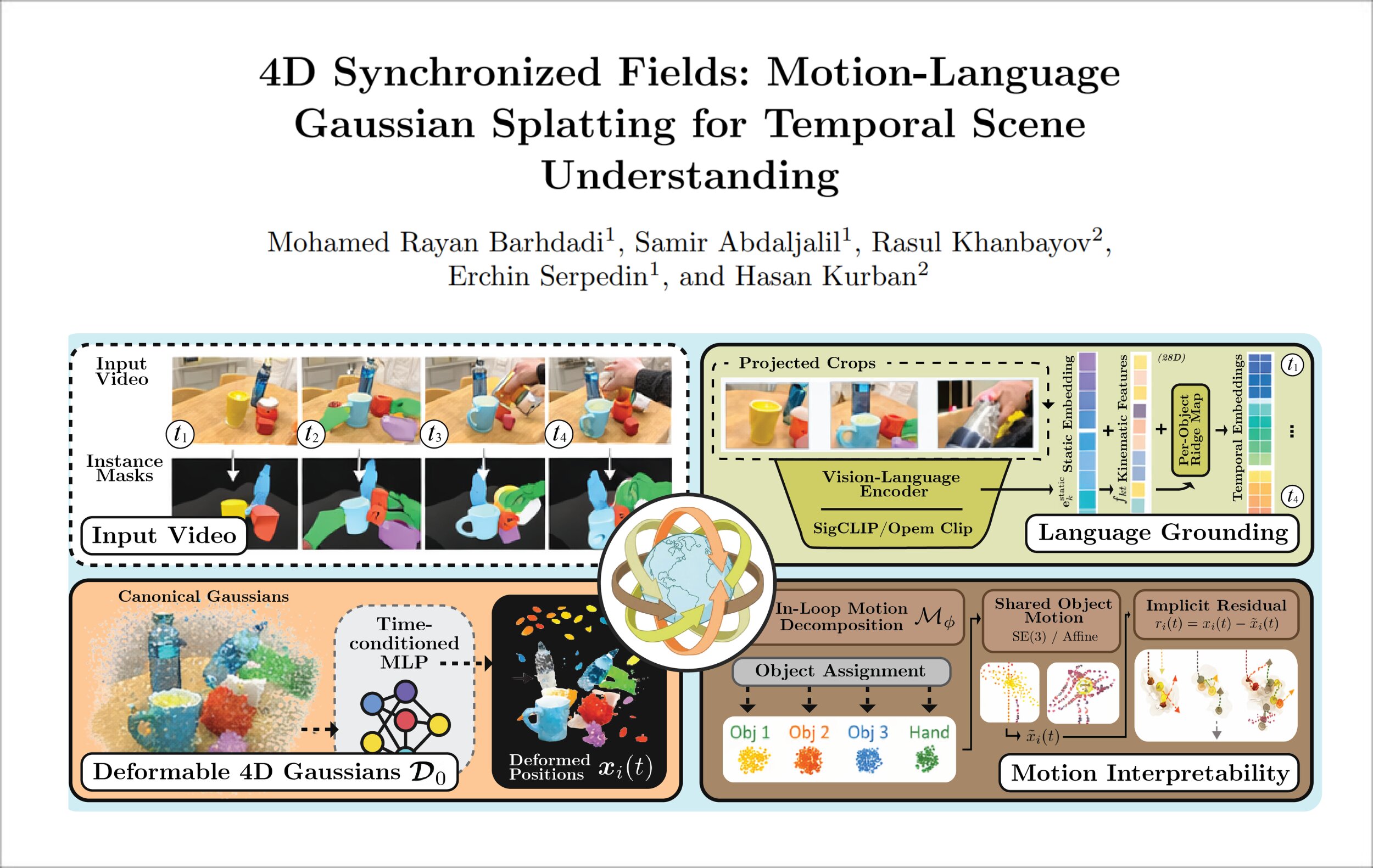
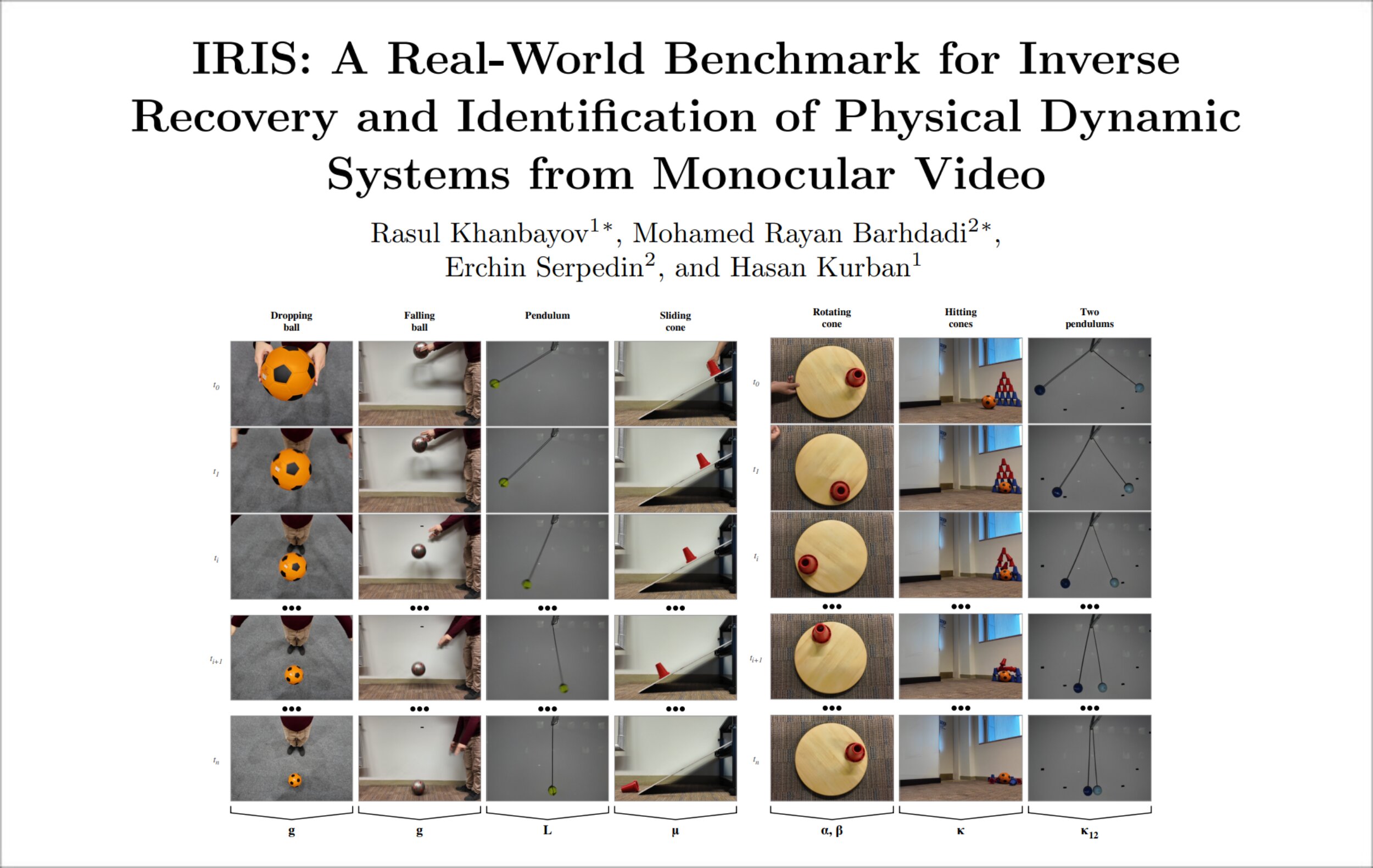
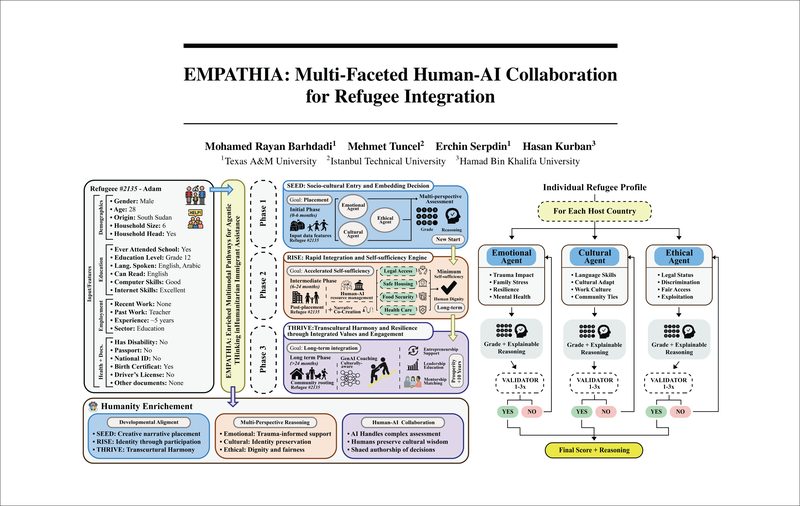
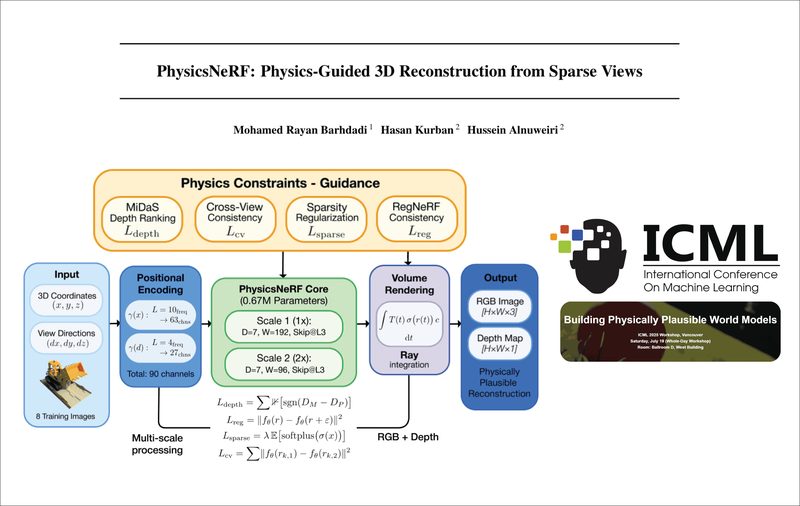
My work has two intertwined threads: physically grounded perception, including 3D/4D reconstruction, motion, and dynamics from visual input (4D Synchronized Fields, IRIS, PhysicsNeRF), and human cognition modeling in AI systems, including agents, beliefs, perspectives, and human-centered decisions (Perception Not Reasoning (soon), EMPATHIA). My research has been accepted and presented at top CV/ML venues, including ECCV, NeurIPS, and ICML, and I had the chance to give talks and invited keynotes at places like MIT, NeurIPS, Texas A&M, among others.
I also have the chance to work with wonderful collaborators, including the AI and Robotics Lab at Harvard University on video understanding and VLMs, ValuesLab at Columbia University on cognitive-science approaches to training vision models, and more. I am currently a Research Scientist Intern at Overshoot (YC W26), working on unified encoders for VLMs.
Vision: Human intelligence begins in the physical world. Before language, humans learn through perception, action, and interaction: tracking objects, predicting motion, recovering structure, and understanding causes. My research starts from this claim: if we want more intelligent systems, then we should map the human cognition and the physical world into machine perception. For vision systems, this means learning representations where objects persist, motion informs structure, physical constraints shape possible futures, and N agents can perceive the same scene from N viewpoints.
- Physics-informed and cognitive-science approaches to vision
- 3D/4D scene understanding and reconstruction
- Vision-language models (VLMs) and video understanding
News
recent updates- Jun 2026
 One paper accepted to ECCV 2026, see you in Sweden!
 - Jun 2026Heading to Denver, CO to attend CVPR 2026.
- Jun 2026Awarded the Student Grant ($3,000) from ValuesLab at Columbia University to support my work.
- May 2026Joined Overshoot (YC W26) as a Research Scientist Intern, working on VLMs this summer.
- Apr 2026Accepted to ICVSS Computer Vision Summer School in Sicily, Italy.
- Mar 2026Accepted to ACVSS Computer Vision Summer School in Accra, Ghana.
- Mar 2026Attending EACL in Rabat, Morocco this week.
- Feb 20262 new papers on arXiv, make sure to check them out!
- Jan 2026Awarded SREG TAMUQ Grant $50,000 (Cool projects coming up ;)
- Jan 2026Attending MenaML Machine Learning Winter School at KAUST.
- Dec 2025Heading to San Diego to give a talk and present EMPATHIA at NeurIPS 2025.
- Oct 20251st Place at QCRI Research Symposium.
- Oct 2025Gave a talk at MIT URTC.
- Sep 2025Visited EPFL.
- Sep 2025Paper accepted to NeurIPS 2025 Proceedings.
- Jul 2025Paper accepted at ICML 2025 Workshop.
- Jun 2025Started internship at SLB.
- May 2025Joined QCRI as Research Intern.
- Feb 20251st Place at Invent for the Planet 2025.
- Feb 2025Best Poster at HBKU–TAMU Research.
- Jan 2025Selected for UG Research Scholars program.
- Oct 2024Won QF Tech Pitch ($11,000).
- Aug 2024Awarded UREP Grant.
Research
* denotes equal contribution